
Buying a house should be a source of happiness, not a cause of tension. However, the skyrocketing property market in India, especially in cities surrounding the metros, has led to a drastic increase in real estate scams. Buyers are encountering fake advertisements, doctored documents, dishonest sellers who misrepresent their flats, and sellers with unclear ownership. But most scams can be avoided through proper awareness. Think of it as your checklist to avoid property fraud.
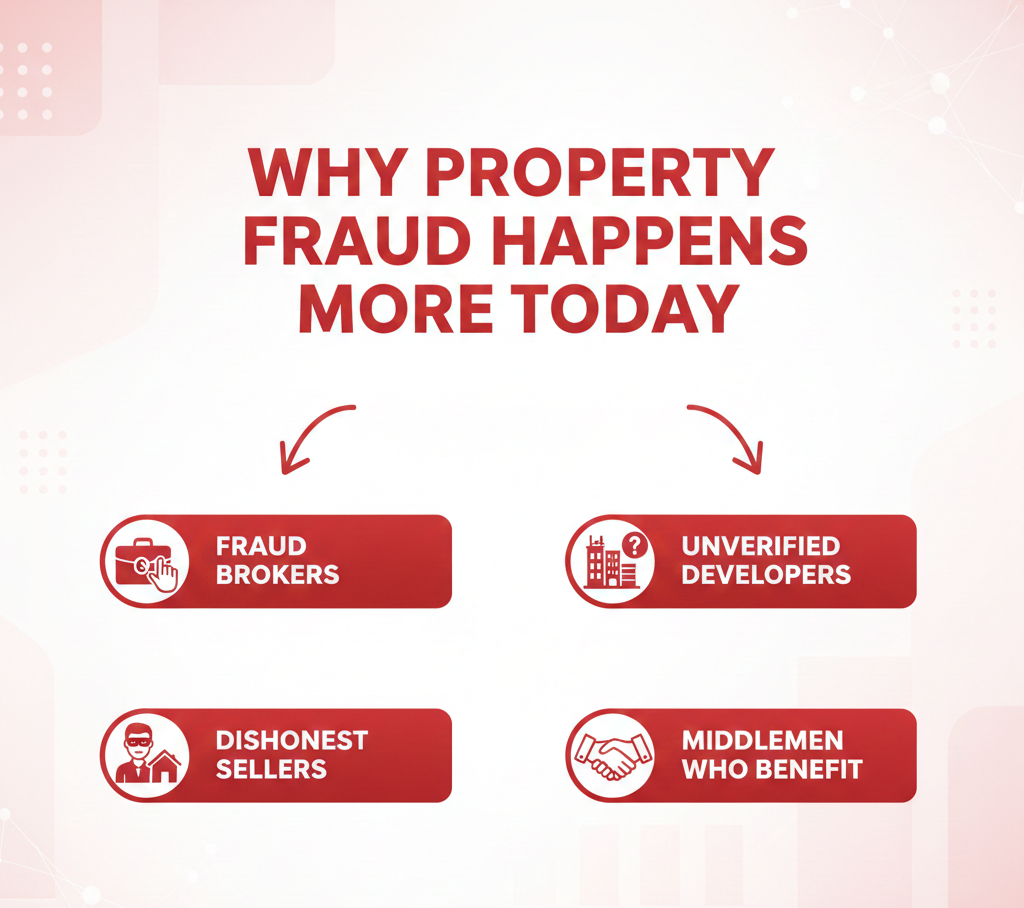
Why Property Fraud Happens More Today
The real estate market is going through a gold rush. The accelerated speed also attracts the following people and influences:
- Unregistered brokers
- Dishonest sellers
- Unverified developers
- Middlemen who benefit from buyer inexperience
This blog presents not only which mistakes folks commit the most frequently but also how to avoid them by applying a strong, up-to-date checklist to avoid property fraud.
10 Common Mistakes Home Buyers Must Avoid
1. Not Verifying the Seller or Builder
One of the main reasons for fraud is falsifying ownership or forging credentials. Thus, before you trust anyone:
- Investigate the builder’s previous projects
- Make sure their name appears on the official approvals of the project
- Check out authentic reviews and ensure that the registered contact details are real
2. Ignoring RERA Registration
Every residential development has to be registered with the state’s RERA department. A RERA ID is a guarantee for:
- Approved plans
- Strictly followed the possession timeline
- Compliance with laws
- Accountability of the builder
3. Skimming Through Property Documents Instead of Examining Them Properly
Don’t trust photocopies alone. Always look at these documents:
- Title deed
- Encumbrance certificate
- Approved layout plan
- Sale agreement
- Allotment letter
Missing or unclear documentation is a substantial danger – the main factor that necessitates having a checklist to avoid property fraud before site visits for every buyer.
4. Not Checking for Legal Disputes
Certain properties that are visually attractive on paper, however, are embroiled in perpetual disputes. Checking at the registrar’s office or by consulting a legal expert can unearth:
- Conflicts over titles
- Problems with owners
- Litigation that has not yet been resolved
If the seller is reluctant to give the legal report, depart.
5. Trusting Verbal Promises
“Sir, we shall give you this price later.”
“Ma’am, there will be an extra park for your tower.”
If it’s not specified in the contract, it does not exist from a legal standpoint.
Require that all the arrangements be documented in the Builder-Buyer Agreement.
6. Rushing into Token Payments
Before showing you the papers, builders or brokers could be urging you to give them a token of money. Do not consent to that.
A token payment made too soon is mostly non-refundable even if the project is later found to be unsafe.
Always, payment should be made only after verification of the documents.
7. Ignoring Future or Hidden Charges
The price of a property often hides additional costs such as:
- Parking fees
- Clubhouse membership
- Maintenance deposits
- Floor-rise charges
- Electricity meter setup
- One-time infrastructure fees
Any cost that has not been clarified at the beginning may be a surprise expense later on.
8. Accepting Possession Without OC/CC
If a property is ready for possession without:
It is highly risky.
No OC = no legal right to live there + problem in getting utilities + difficulty in reselling.
9. Not Checking Resale Property Liabilities
In case of resale, check out:
- Most recent tax receipts
- Electricity/water bills
- Society maintenance charges
- No-dues certificate
The existence of unpaid charges that sellers may secretly want to shift to the buyer is one of the tricks.
10. Forgetting to Cross-Verify the Property’s Physical Condition
Not all frauds come from a set of documents — sometimes the actual apartment is the fraud.
You should be vigilant about:
- Cracks in the structure
- Low-quality hardware
- Water leaking
- Unfinished amenities
- Mismatched carpet area
Handy Table: What to Check Before Making Any Payment
FAQs
1. How can I confirm if a property is legally approved?
One should look at the RERA registration number, the approved building plan, and the title documents by verifying the project on the official RERA website.
2. What is the biggest sign of potential property fraud?
In case a seller is reluctant to show you the documents, constantly pushing you to make the payment quickly, or “too good to be true” type of deals are offered, you’d better take it as a warning signal.
3. Should I hire a lawyer before buying property?
Yes, in case you are not confident with the paperwork. A lawyer can check the legality of the documents, help you identify potential problems, and make sure a sale agreement is drafted in a way that protects your interests.
Secure Your Purchase With Simple Awareness
It takes quite a bit of patience and attention to avoid being defrauded, and no legal expertise is required in this case. If you take the right steps, inquire about the right things, and follow a checklist to avoid property fraud, you will keep your investment, your time, and your peace of mind.
In case you require properties that have been vetted by law and are transparent, contact Neotown.
Email: info@theneotown.com
Website: www.theneotown.com
Also Read: Life Inside the NeoTown Apartments Complex: A New Definition of Community Living